
The Moorish Legacy: 8 Centuries of Moorish Rule

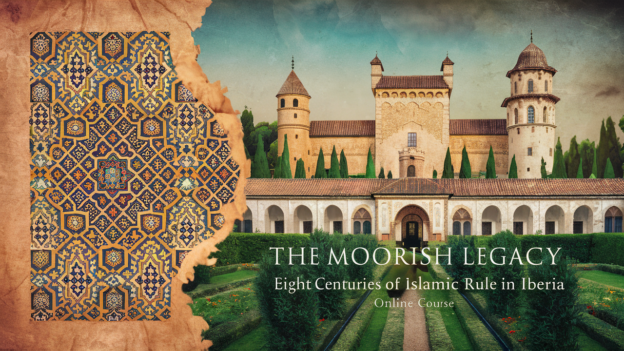
About Course
The Moorish Legacy: Eight Centuries of Islamic Rule in Iberia
For nearly 800 years—from 711 to 1492—much of the Iberian Peninsula was under Islamic rule. This era, known as Al-Andalus, witnessed the flourishing of a unique civilization that blended elements of Arab, Berber, and European cultures. The Muslim rulers of Al-Andalus, commonly referred to as the Moors, presided over a golden age of cultural and intellectual achievement, leaving an indelible mark on Spain, Europe, and the world.
About This Course
This course provides a comprehensive exploration of the Moorish period in Iberian history, from the initial conquest in the 8th century to the fall of Granada in 1492. Through engaging lessons and insightful analysis, learners will delve into the political, cultural, scientific, and artistic developments of Moorish Spain, discovering a civilization whose legacy still resonates today.
Course Structure and Key Topics
1. Origins and Conquest
- Investigate the Arab and Berber roots of the Moors.
- Explore their crossing of the Strait of Gibraltar and the establishment of Islamic rule in Europe.
2. Political History of Al-Andalus
- Examine the foundation and evolution of the Umayyad emirate.
- Discover the golden age under the powerful Caliphate of Córdoba.
- Understand the fragmentation into independent Taifa kingdoms.
- Discuss the influence of successive North African dynasties striving for unity and control.
3. Cultural and Intellectual Achievements
- Study architectural masterpieces:
- The Great Mosque of Córdoba
- The Alhambra Palace in Granada
- Highlight groundbreaking scientific advancements in:
- Mathematics
- Astronomy
- Medicine and other sciences
- Understand how Moorish scholarship provided a crucial bridge between classical antiquity and the European Renaissance.
4. Literature, Philosophy, and the Arts
- Explore rich literary traditions and influential works by Andalusian poets, philosophers, mystics, and scholars.
- Analyze the development and impact of Arabic and Hebrew literature.
- Appreciate the unique musical traditions and decorative arts that flourished in Moorish Iberia.
5. Religious and Cultural Diversity
- Investigate the concept of “Convivencia,” a period of coexistence and cultural exchange between Muslims, Christians, and Jews.
- Examine how religious tolerance and cultural interactions shaped Andalusian society and contributed to its vibrant diversity.
6. The Reconquista and Lasting Legacy
- Trace the gradual reconquest of Iberia by Christian kingdoms culminating with Granada’s fall in 1492.
- Evaluate the lasting Moorish influence on modern Spanish language, cuisine, architecture, and agriculture.
- Reflect on how the legacy of Al-Andalus continues to shape modern European and Western societies.
Why Study This Course?
By offering a balanced, nuanced, and multifaceted exploration of Moorish Spain, this course provides valuable insight into one of history’s most fascinating eras. Understanding the triumphs and challenges of Al-Andalus allows us to appreciate the immense potential of cultural exchange and coexistence—lessons highly relevant to our contemporary, diverse societies. The story of Al-Andalus serves as a powerful reminder of the heights achievable when disparate cultures come together in openness, mutual respect, and cooperation.
Join us on an exciting journey through time, as we uncover the vibrant world of the Moors and explore the enduring legacy of Islamic Spain.
Course Content
Moorish Legacy
-
Origins of the Moors and the Islamic Conquest of Iberia
-
The Umayyad Emirate and Caliphate of Córdoba
-
The Taifa Kingdoms and Almoravid Rule
-
The Almohad Caliphate and Nasrid Kingdom of Granada
-
Moorish Architecture and Urban Planning
-
Scientific and Medical Advancements of Moorish Spain
-
Literature, Poetry and Philosophy in Al-Andalus
-
Moorish Art, Music and Culture
-
Religious Diversity and Coexistence in Islamic Iberia
-
The Reconquista and Fall of Granada
-
The Moorish Legacy in Spain and Beyond
-
The Moorish Legacy: Eight Centuries of Islamic Rule in Iberia
-
The Decline of Public Hygiene: Christian Views on Moorish Bathing Customs
-
The Decline of Public Hygiene: Christian Rejection of Moorish Bathing Culture (Comprehensive)
Student Ratings & Reviews